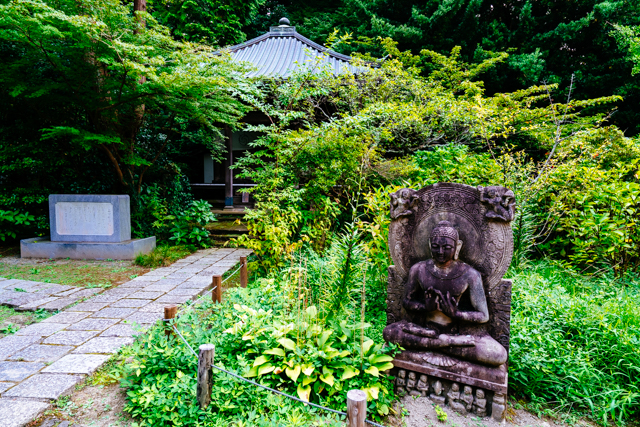
About Ankokuron-ji Temple
Ankokuron-ji Temple is the place where Nichiren spent 20 years after moving to Kamakura, and it is located at the site of the Matsubagayatsu Persecution, just like Myōhō–ji Temple. It was established in 1253 and derives its name from the “Daimoku” (Nam-Myoho-Renge-Kyo) that Nichiren propagated. Additionally, next to the cave (hokutsu) where he wrote his treatise “Rissho Ankoku Ron,” his disciple Nichiro built Ankokuron-ji Temple, which later came to be known as such. The main deity is the Buddha Shakyamuni with the title “Namu Kuon Jitsujo Honshi Shakamuni Butsu,” and various historical sites remain, including the Nanmen Cave and the cremation site of Nichiro. Moreover, from the observation deck on the mountain behind the temple called Fujimi-dai, you can have a panoramic view of the city, including Yuigahama Beach, and it is said that Nichiren chanted the Daimoku towards Mount Fuji.
Location: 4-18, Omachi 4-chome, Kamakura City
Access: 15 minutes on foot from JR Kamakura Station
Hours: 9:00-16:30 (Closed on Mondays)
Admission Fee: 100 yen
Toilets: Available
URL: https://ankokuronji.org/
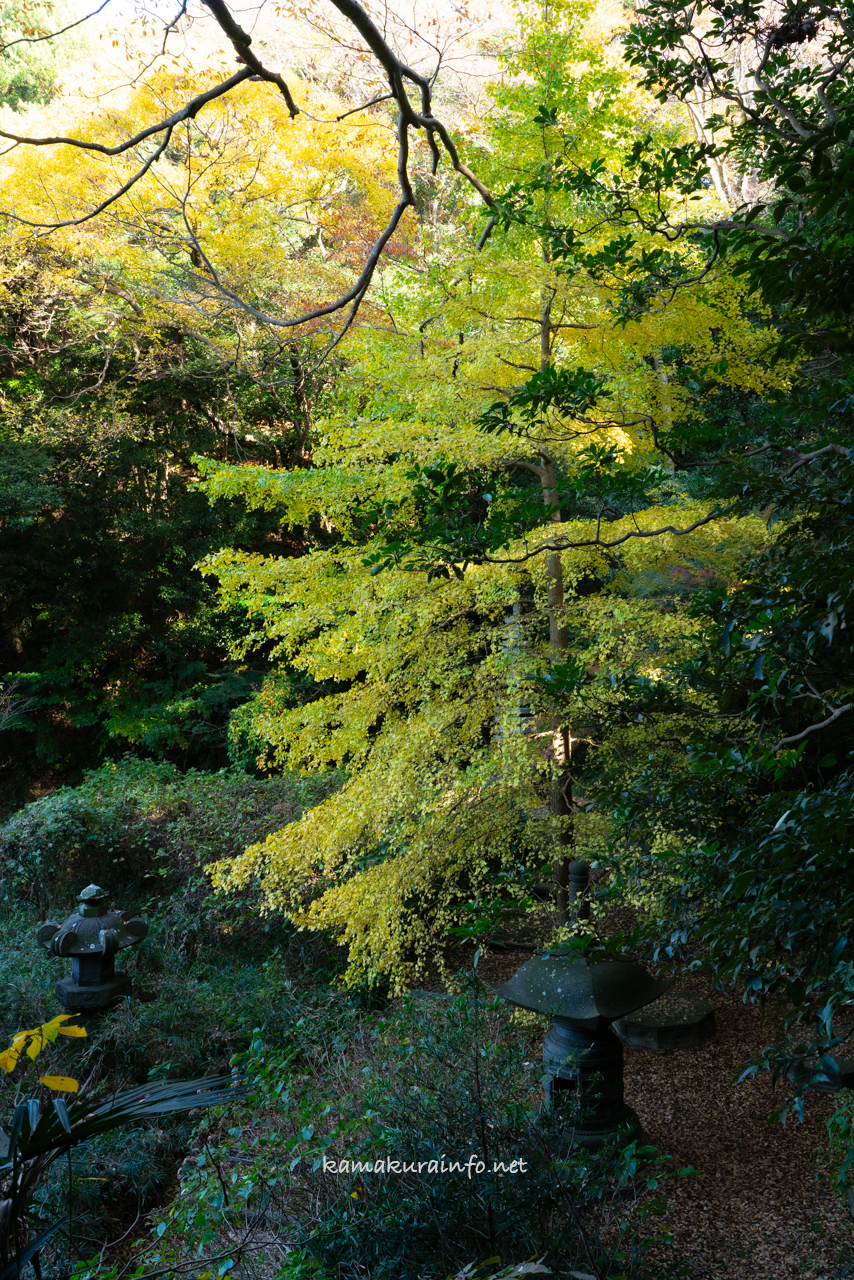
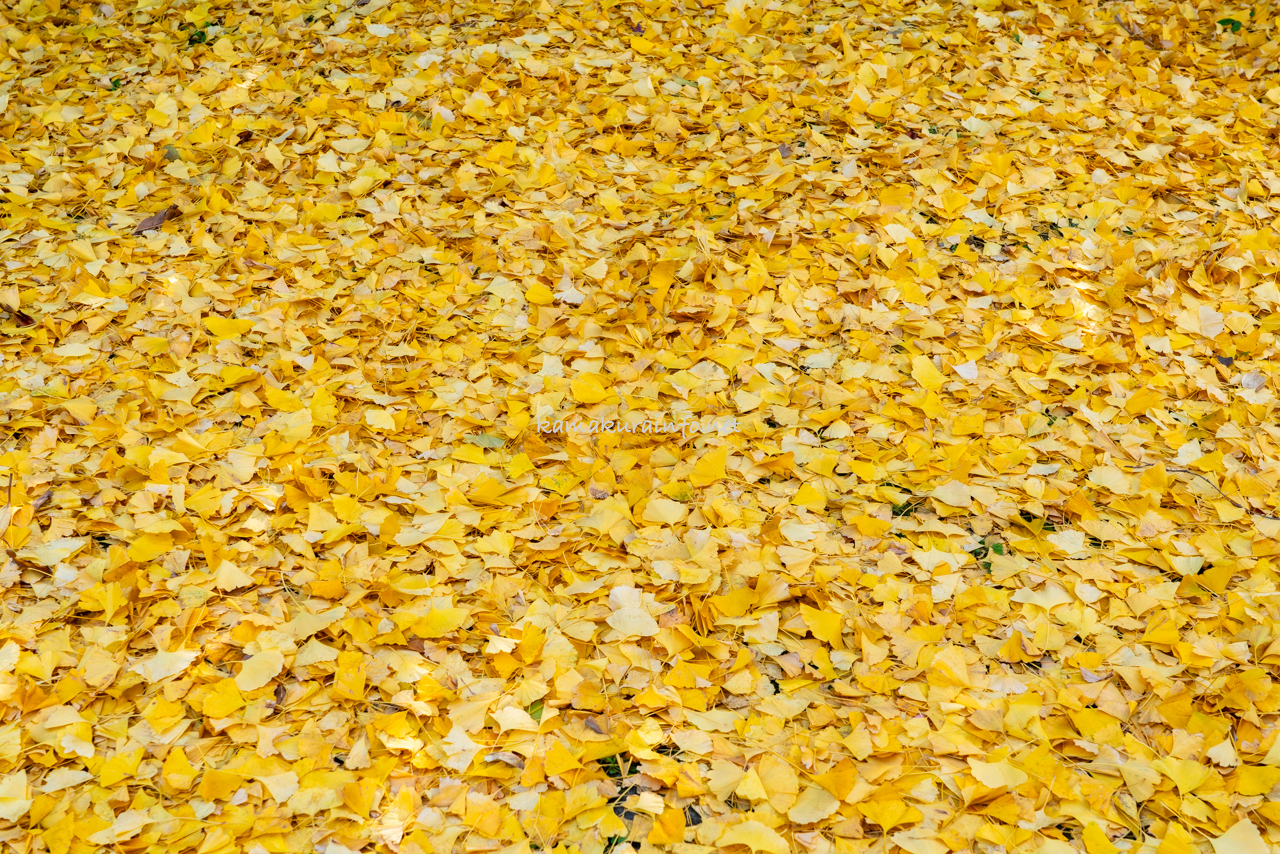
During the autumn foliage season, the approach to the shrine is beautifully carpeted with fallen ginkgo leaves.
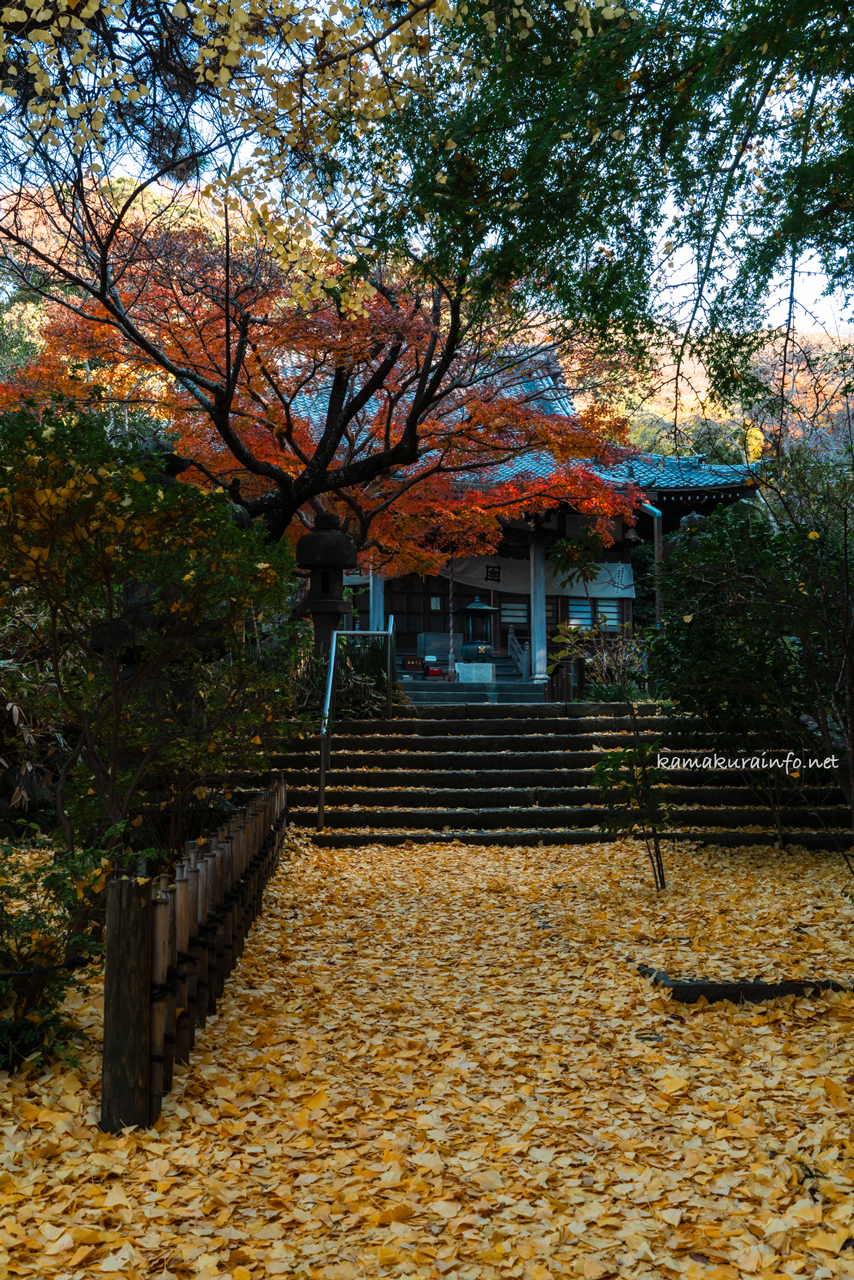
A temple approach covered with fallen ginkgo leaves.
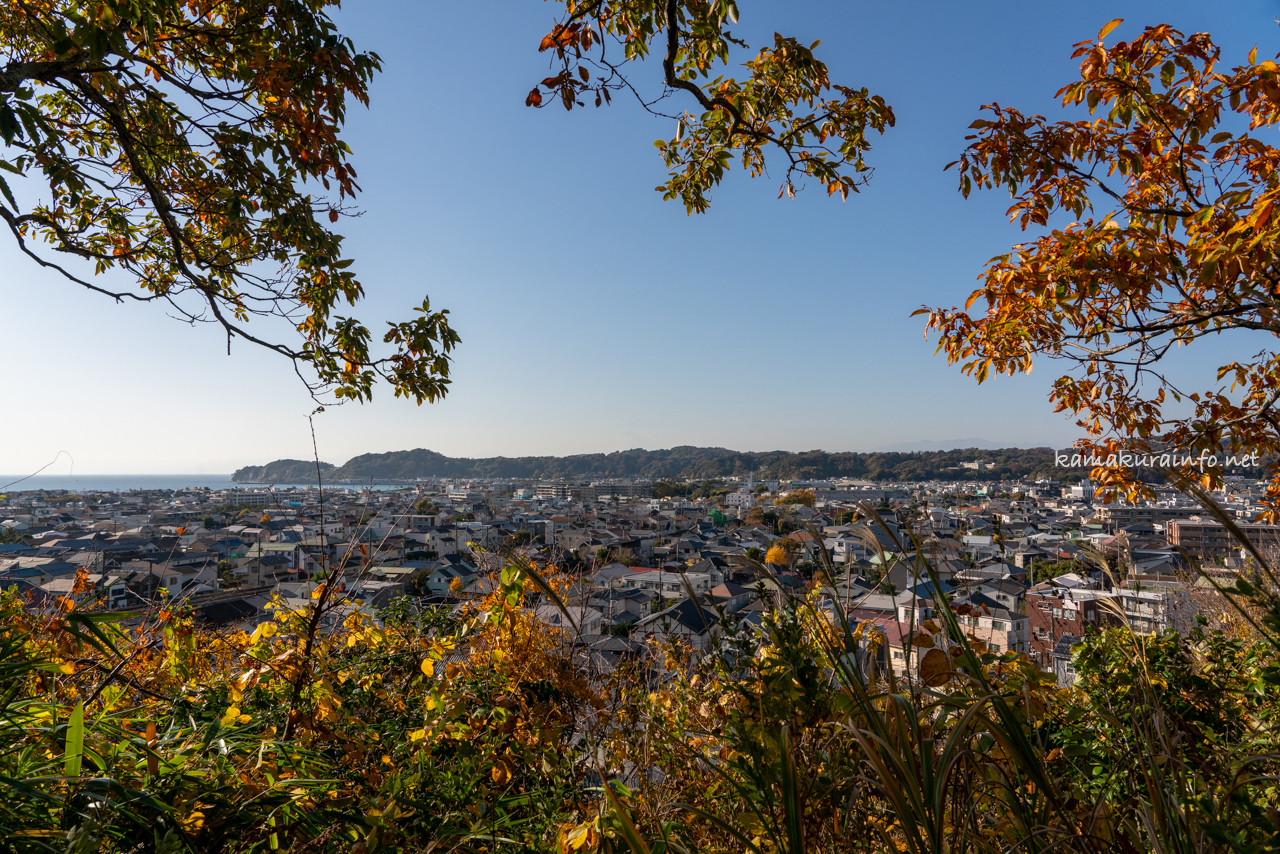
From the Fujimidai viewpoint, you can enjoy a panoramic view of Kamakura town and the sea. On clear days, Mount Fuji is also visible.
The temple grounds are surrounded by nature, offering a peaceful and tranquil atmosphere.
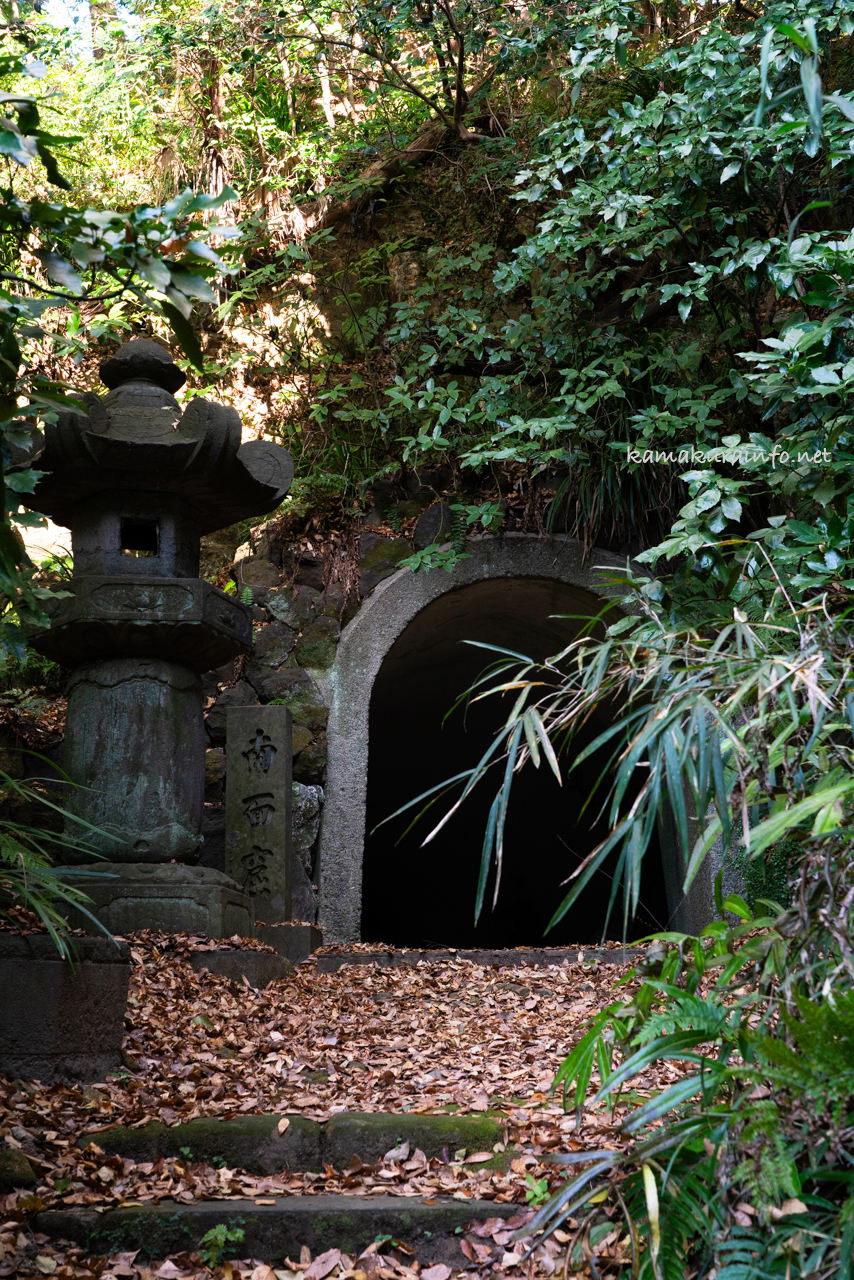
It is said that Saint Nichiren was guided to safety by a white monkey during the Matsubagayatsu Persecution, and spent one night here.
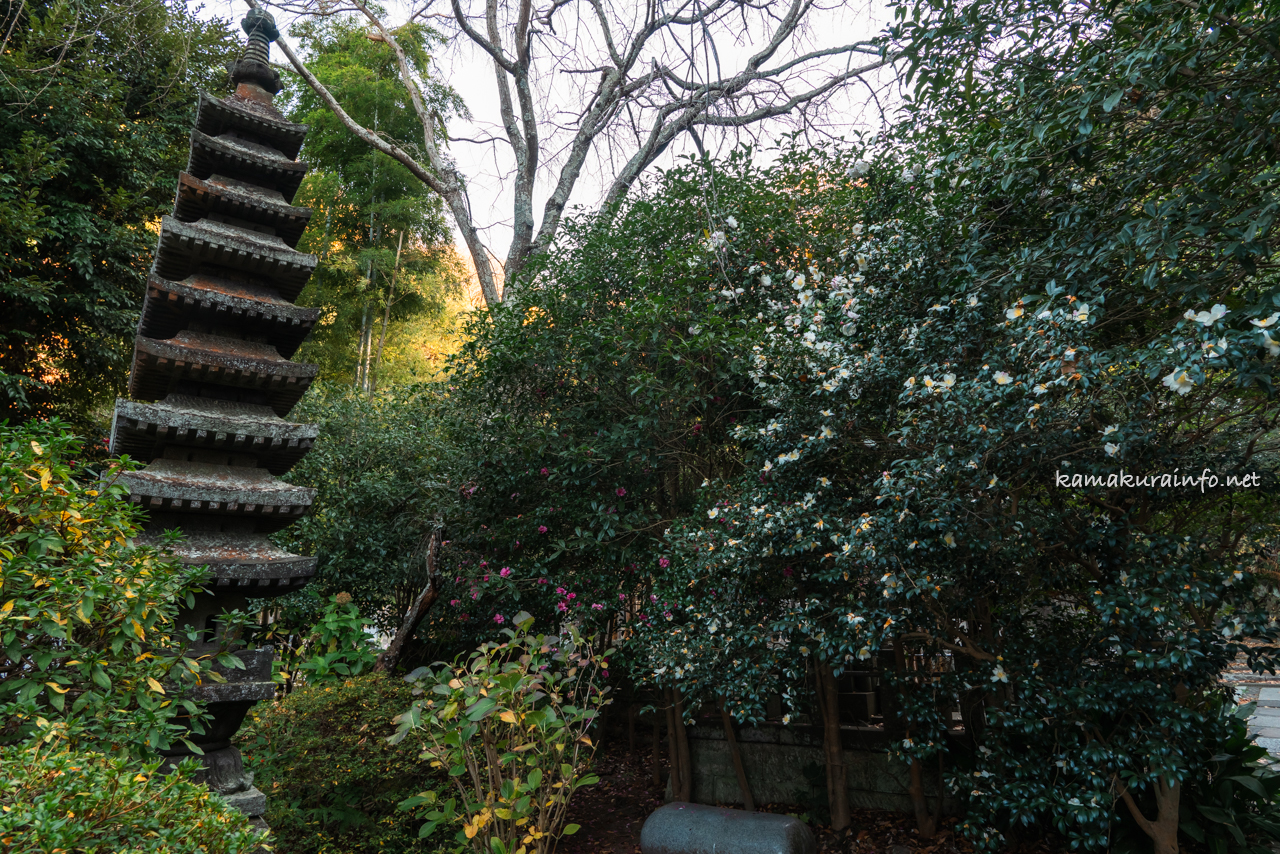
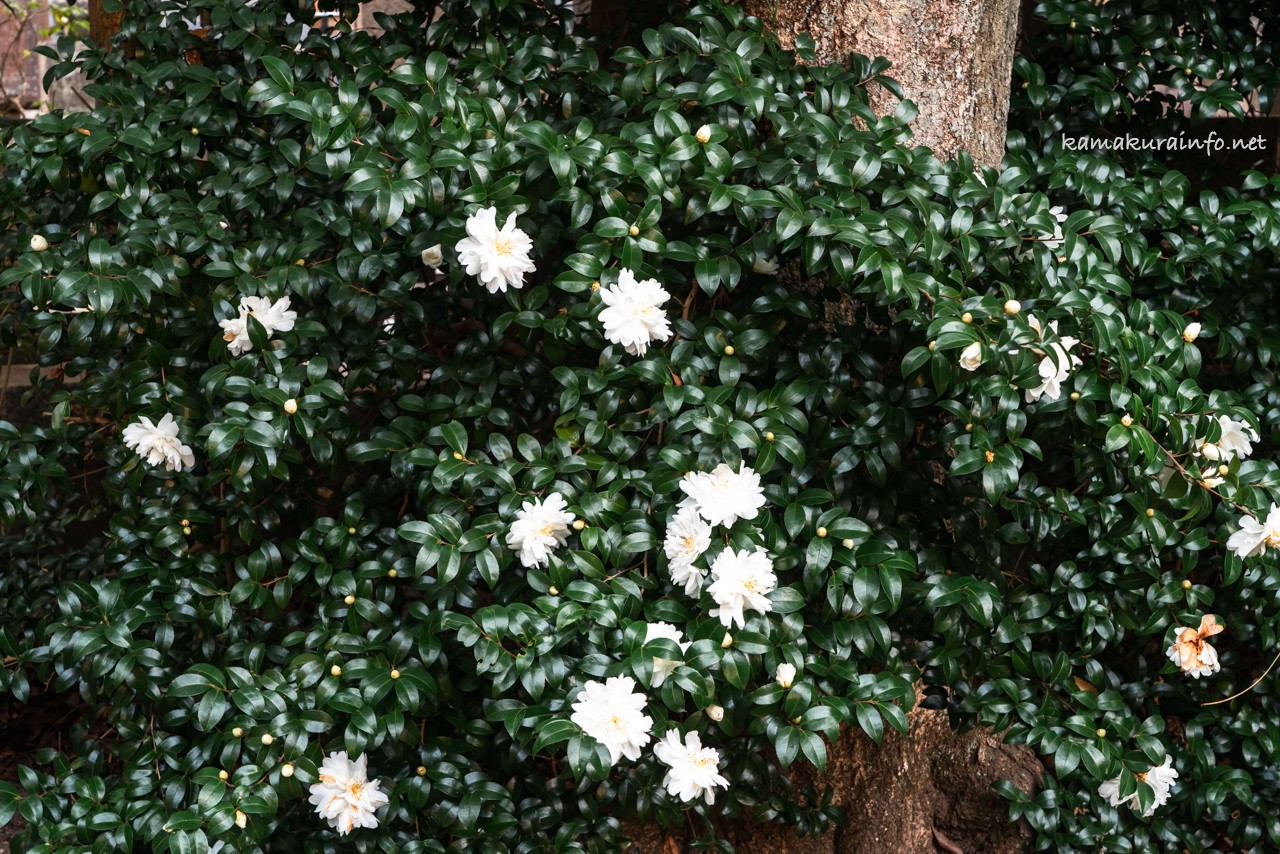
The sasanqua camellias on the grounds begin to bloom around mid-November and can be enjoyed until mid-December.
Sasanqua (Camellia sasanqua) is an evergreen shrub in the tea family that blooms mainly from late autumn to winter (around November to December).
Its flowers come in shades of white, red, and pink, and it is widely used as a garden tree or hedge plant because it adds color during the cold season.
A key difference from camellias is that its petals fall one by one when the flower withers.
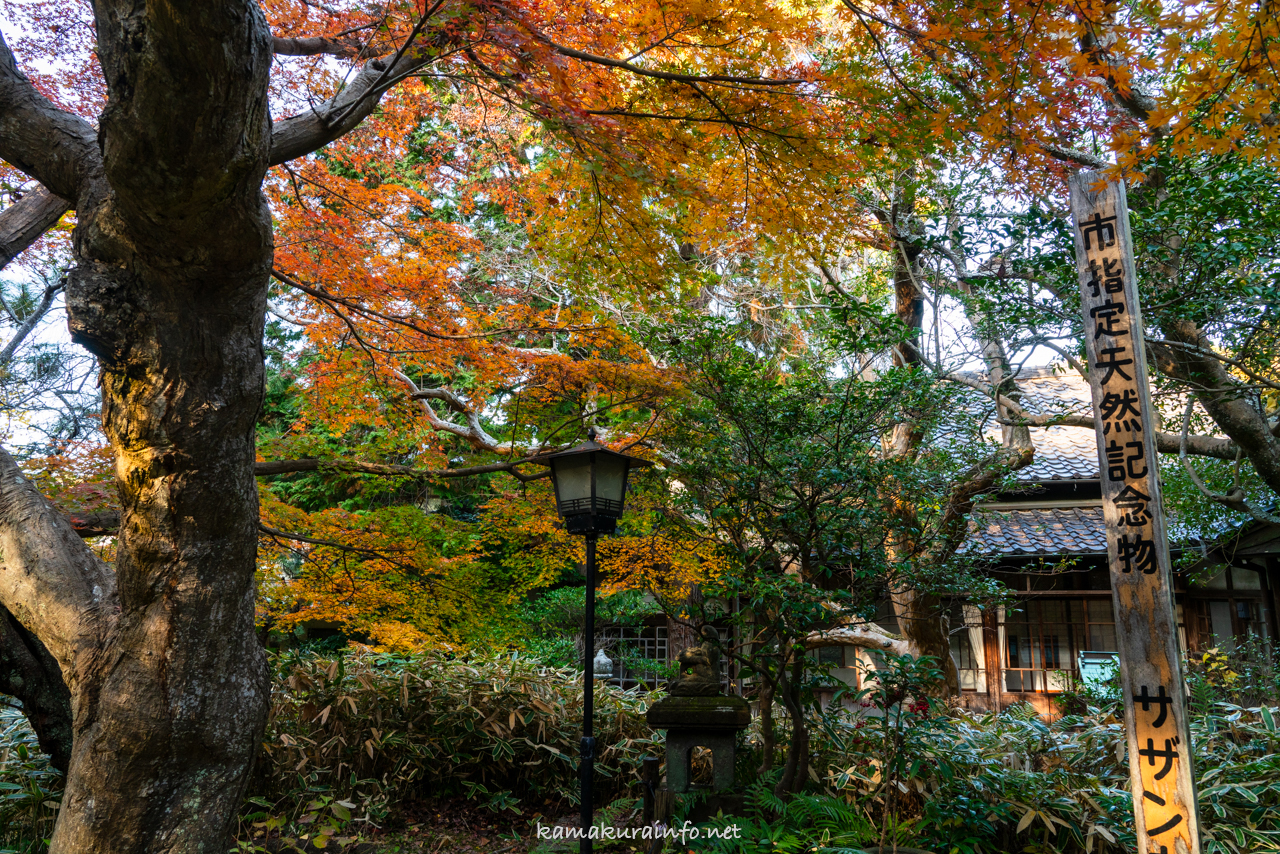
During the autumn foliage season, you can enjoy maple leaves in a wide variety of vivid colors.
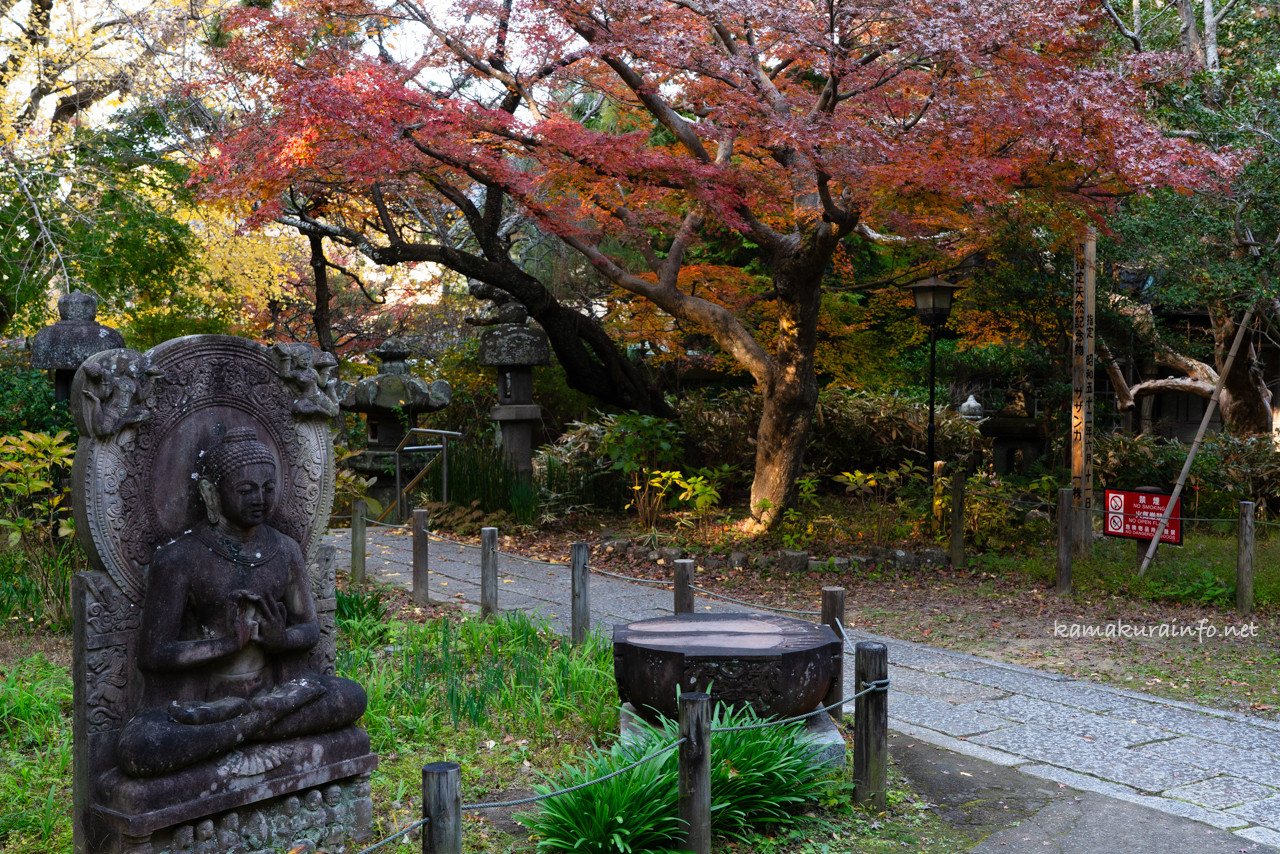
You can see the beautifully colored autumn leaves from around late November.
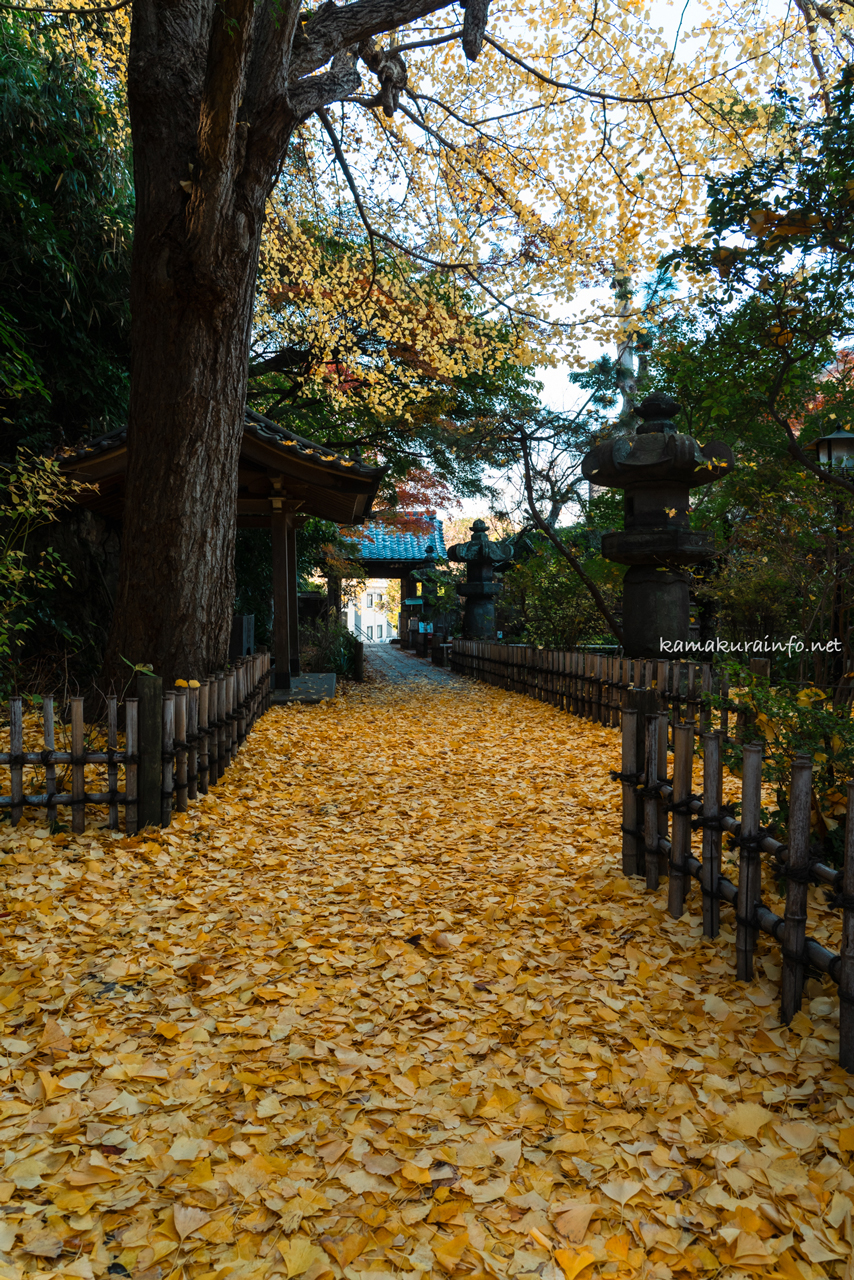
A carpet of fallen ginkgo leaves in front of the temple gate.
・Nearby Shrines, Temples, and Other Attractions
Myōhō–ji 妙法寺(2-minute walk)
Chōshō-ji 長勝寺(5-minute walk)
Jōgyō-ji 上行寺(6-minute walk)
・Cafes and restaurants around Ankokuron-ji Temple