In early December, Kamakura reaches the peak of its autumn foliage season. The temple grounds and approach paths are transformed into shades of red and yellow, revealing a side of Kamakura that feels a little different from usual.
This time, we enjoyed the autumn colors of Kamakura while walking along the popular hiking route that stretches from Kuzuharaoka Shrine to Genjiyama Park. Surrounded by nature and blessed with a peaceful atmosphere, this quiet trail is a highly recommended route where you can enjoy both sightseeing and a relaxing walk.
Access to Kuzuharaoka Shrine
There are mainly three routes to access Kuzuharaoka Shrine:
-
Via Zeniarai Benzaiten Ugafuku Shrine
-
Via the Kuzuharaoka Hiking Course from Kita-Kamakura (Jochiji entrance)
-
Via the hillside behind Jufuku-ji Temple
Among these, only the route from Zeniarai Benzaiten is fully paved. The route behind Jufuku-ji Temple turns into a hiking trail partway along the way, while the Kuzuharaoka Hiking Course from Kita-Kamakura is a natural trail through the forest.
It takes about a 10-minute walk to reach Kuzuharaoka Shrine from Zeniarai Benzaiten.
About Kuzuharaoka Shrine
Kuzuharaoka Shrine is dedicated to Lord Hino Toshimoto, a nobleman who played an important role in the movement to overthrow the Kamakura Shogunate. As a close aide to Emperor Go-Daigo, Hino Toshimoto was deeply involved in the Genkō Uprising and was executed at this site. In honor of his achievements, Kuzuharaoka Shrine was founded in 1887. His grave can still be found on the southern side of the shrine grounds today.
Today, Kuzuharaoka Shrine is known as a popular power spot for matchmaking and is also worshipped as a shrine for good fortune and academic success. Surrounded by a quiet forest, it is a perfect place to stop by while hiking.
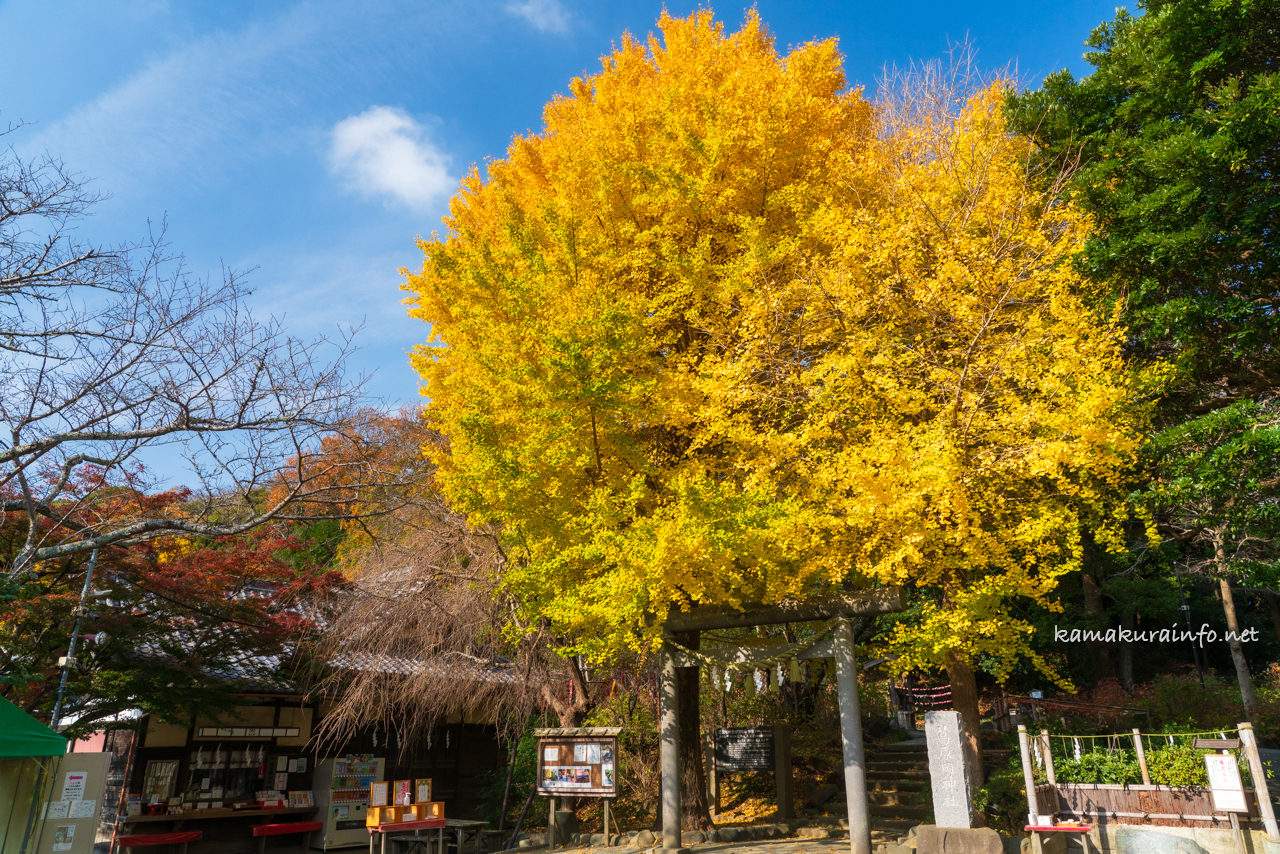
On this visit, my main purpose in coming to Kuzuharaoka Shrine was to see the ginkgo tree standing beside the torii gate at the entrance. During the autumn foliage season, the tree turns a beautiful shade of yellow and dramatically transforms the atmosphere of the approach path, making it one of the highlights of the shrine.
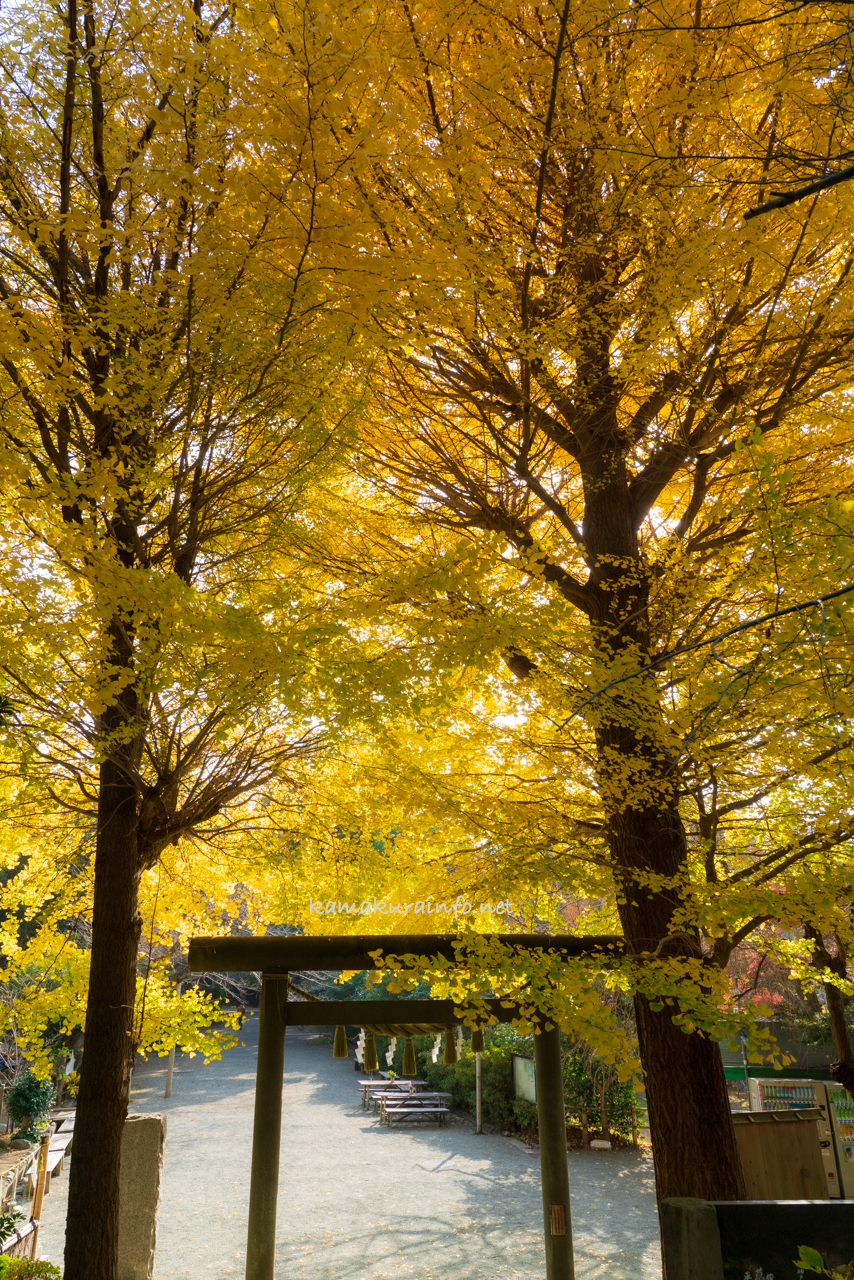
From the back, you can see that two ginkgo trees are standing closely together, appearing almost as one.
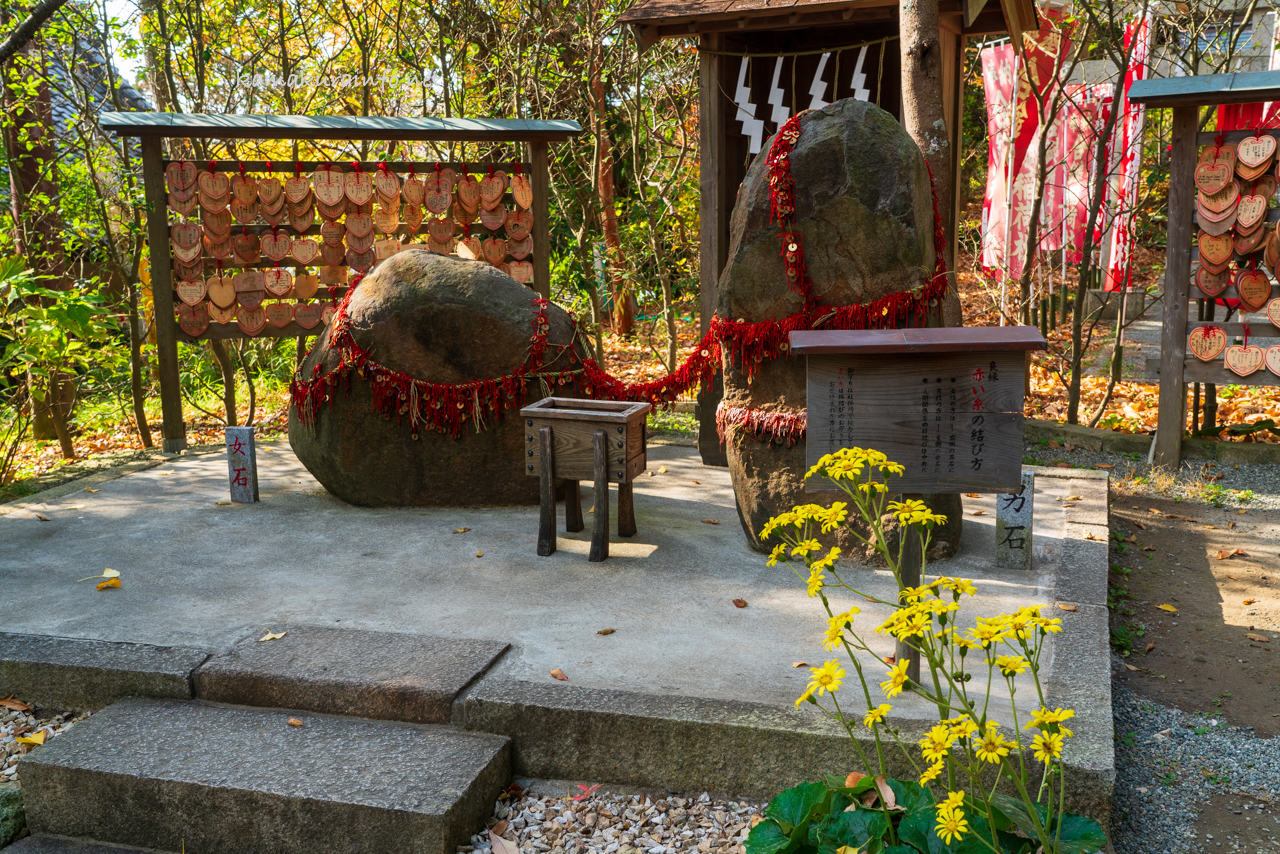
The Enmusubi Stone, which has recently gained attention as a popular power spot for matchmaking.
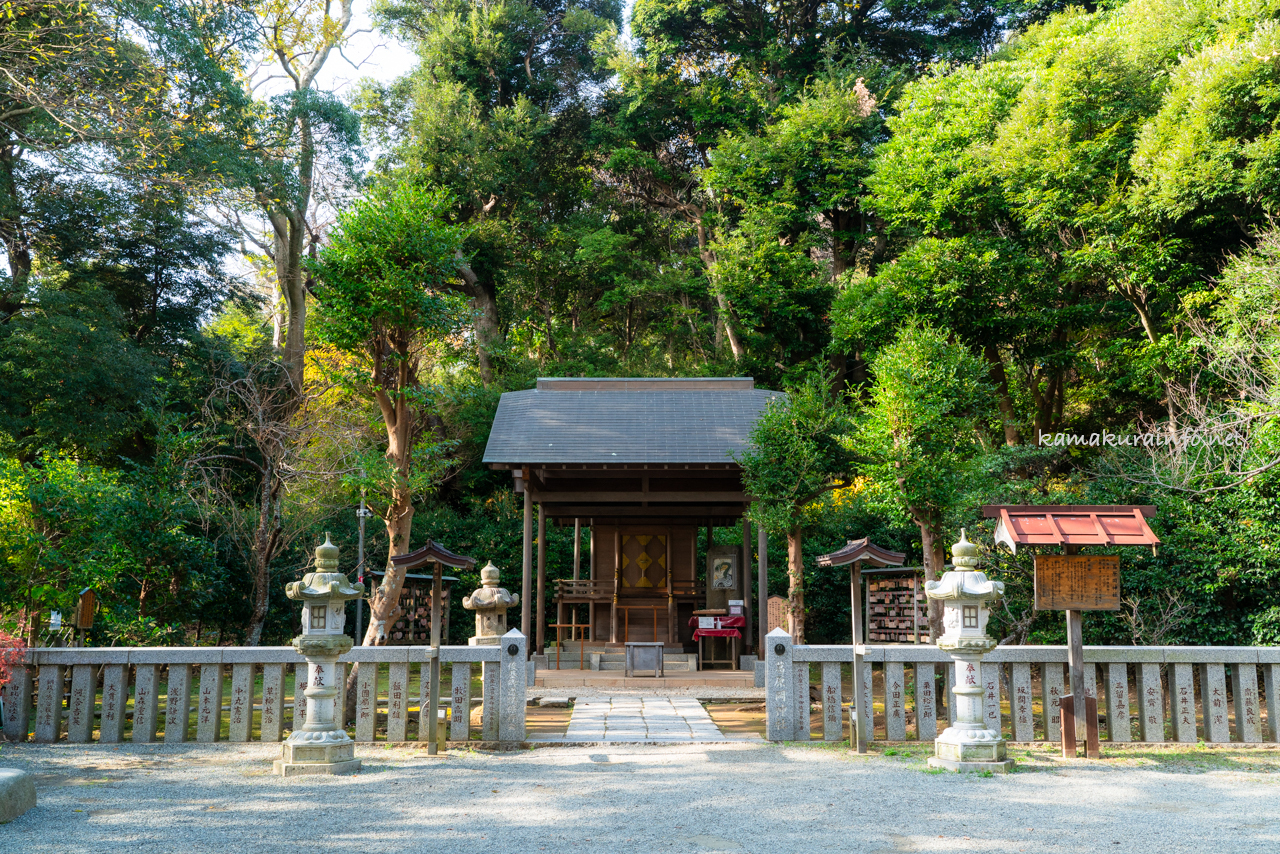
A dignified and unique atmosphere seems to emanate from the main hall, creating an aura that truly feels worthy of being called a power spot.
Within the shrine grounds, a single winter cherry tree was in bloom, allowing us to enjoy a gentle beauty quite different from the autumn leaves.

The approach path truly feels like it’s in the heart of the autumn foliage season.

The grave of Lord Hino Toshimoto, located just off the main approach path.
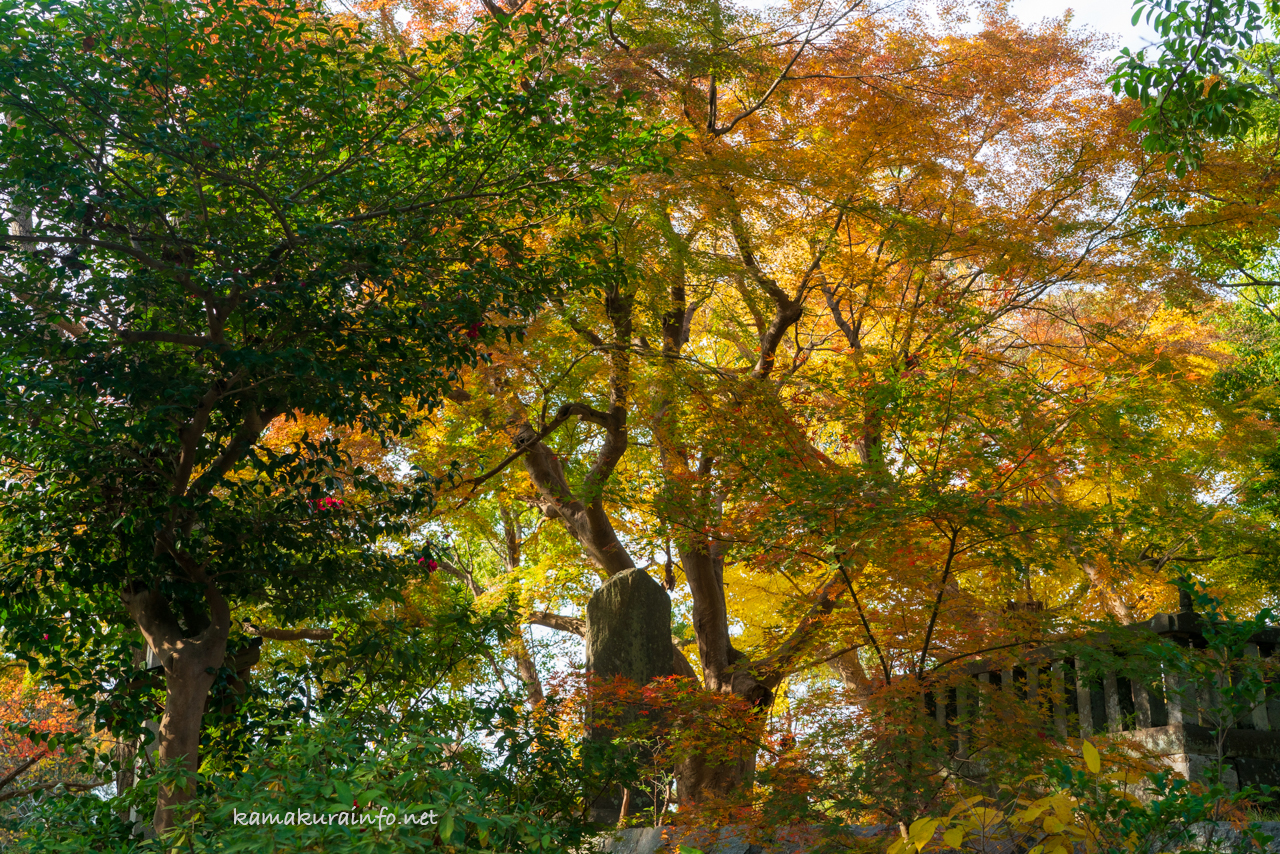
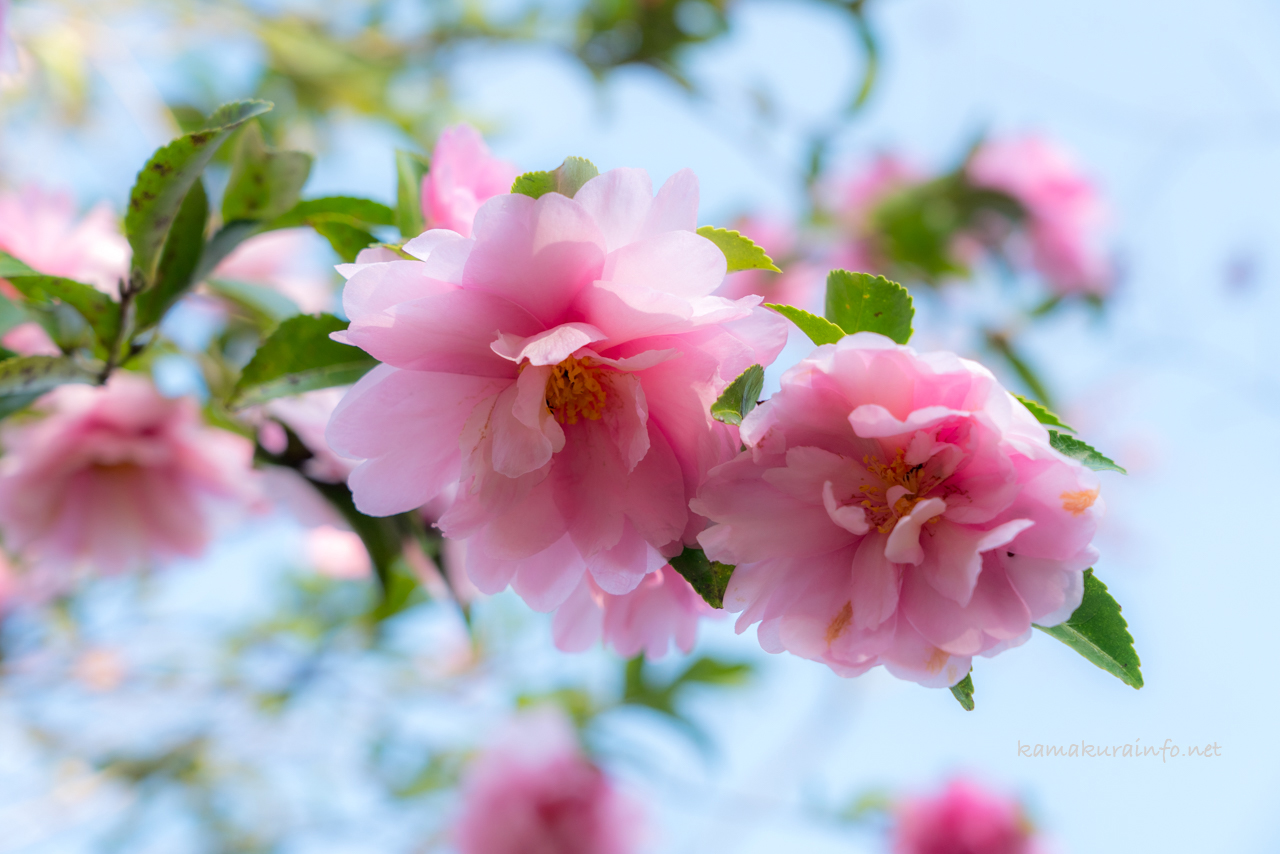
From late November to early December, sasanqua camellias also bloom around Kuzuharaoka Shrine and Genjiyama Park, allowing visitors to enjoy both the flowers and the autumn foliage at the same time.
 。
。
Genjiyama Park
Genjiyama Park is a lush, nature-filled park located around the summit of Mount Genji, which spreads out behind Eishō-ji and Jufuku-ji temples. It is easily accessible from Kuzuharaoka Shrine, which we visited first on this walk. Within the park stands a statue of Minamoto no Yoritomo, and the park is also well known as a famous spot for cherry blossoms in spring and autumn foliage in fall.
The park lies midway along the hiking route that connects Kita-Kamakura with Kamakura Station and the Great Buddha area. It also offers convenient access to Kuzuharaoka Shrine, Zeniarai Benzaiten, and Sasuke Inari Shrine, making it an ideal place for a relaxing stroll.
At the gazebo on the north side of the park, we were able to enjoy beautiful maple leaves in their full autumn colors.
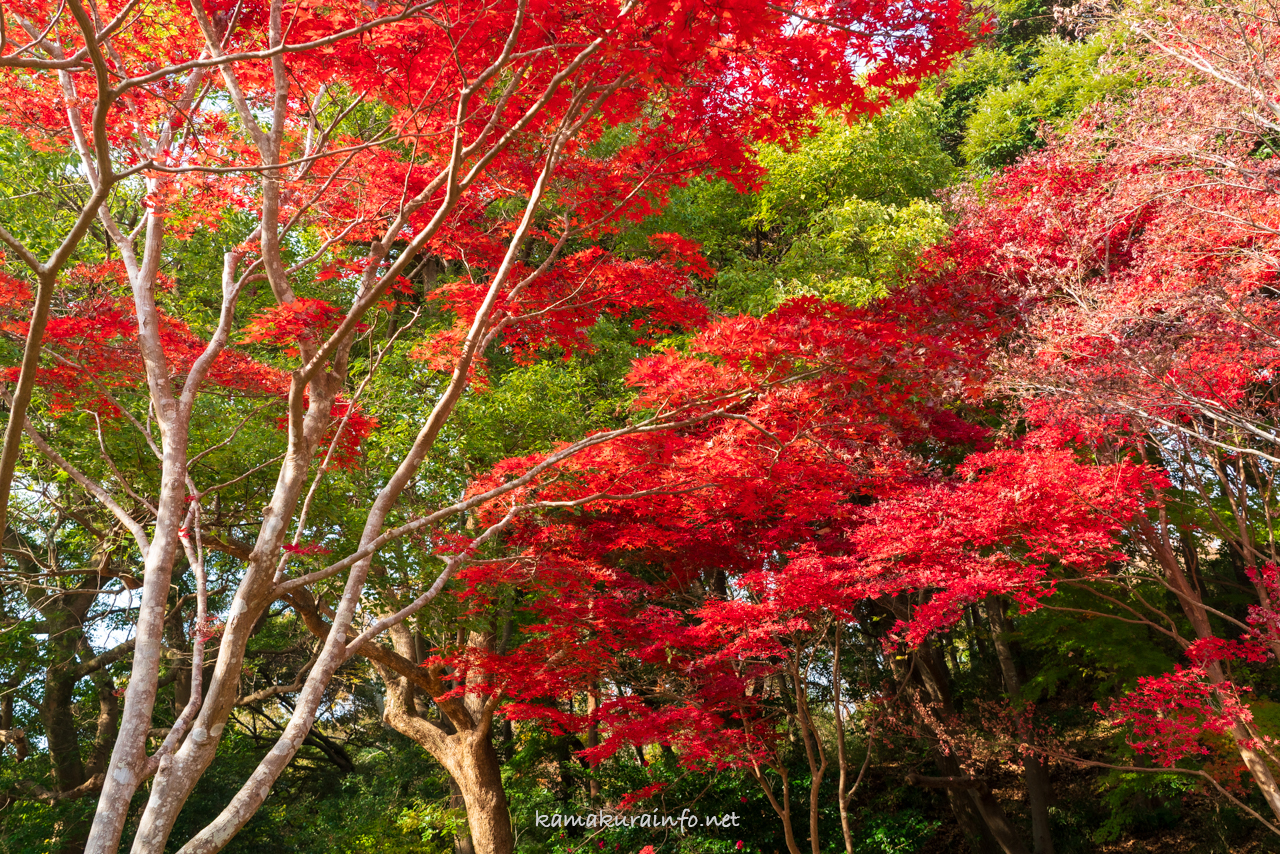
Autumn maple leaves beside the bench between the gazebo and the entrance to Kewaizaka Pass.

Before heading to the southern open area of Genjiyama Park, we made a brief stop at Kewaizaka Pass.

Autumn foliage at Kewaizaka Pass

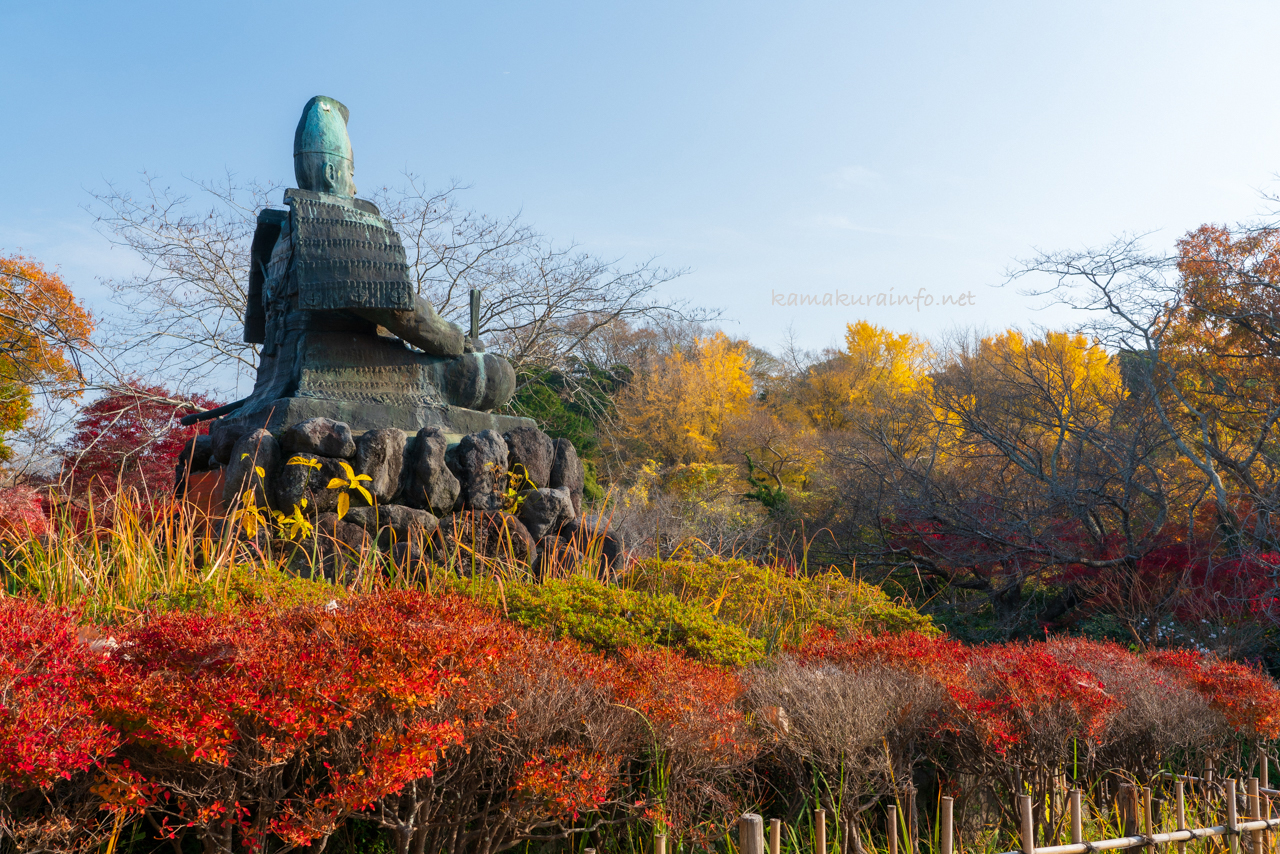
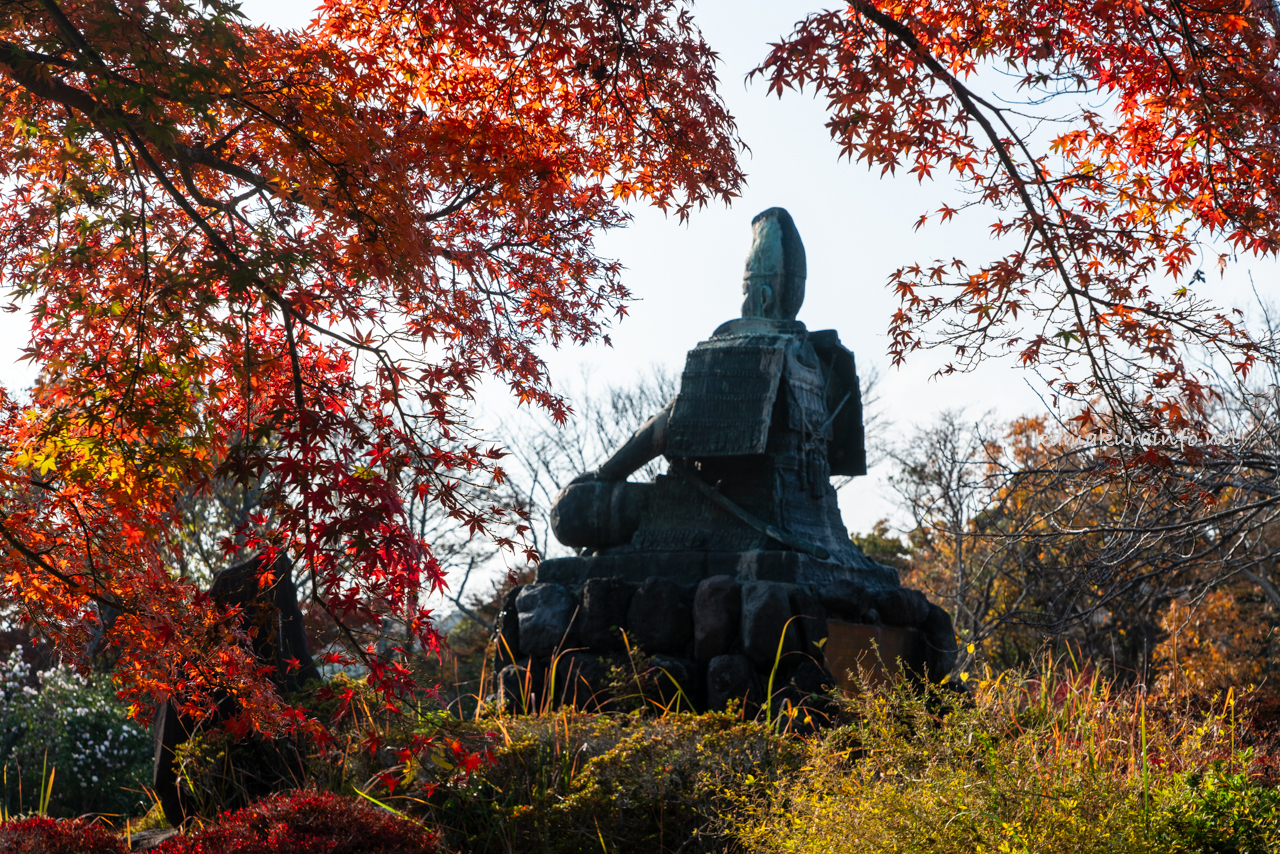
We arrived at the southern area of Genjiyama Park, where a statue of Minamoto no Yoritomo stands in the open plaza. We were able to see the autumn colors of the Japanese pieris (doudantsutsuji) and maple trees, though the foliage seemed to be slightly past its peak.
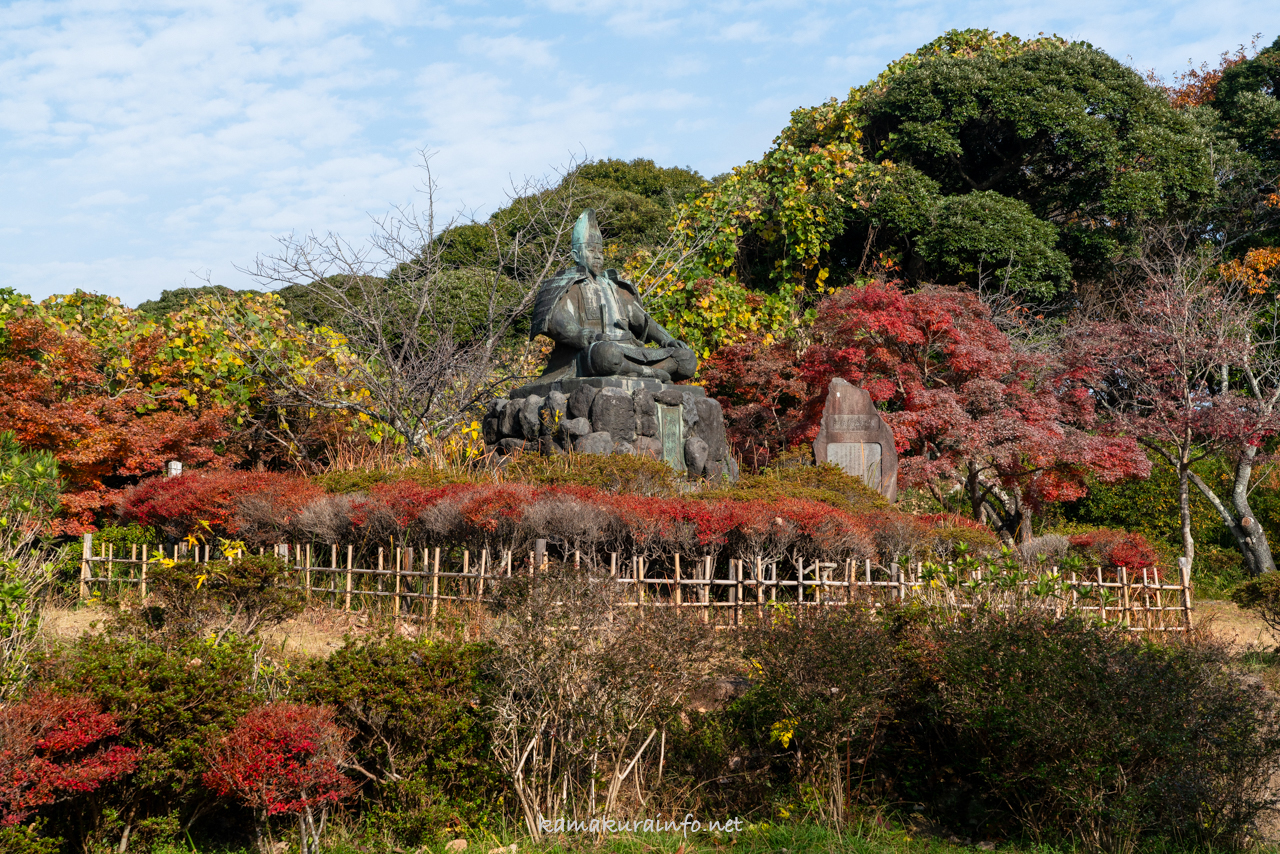
Along the path beside the plaza, we were able to enjoy a beautiful combination of maple leaves and blooming sasanqua camellias.
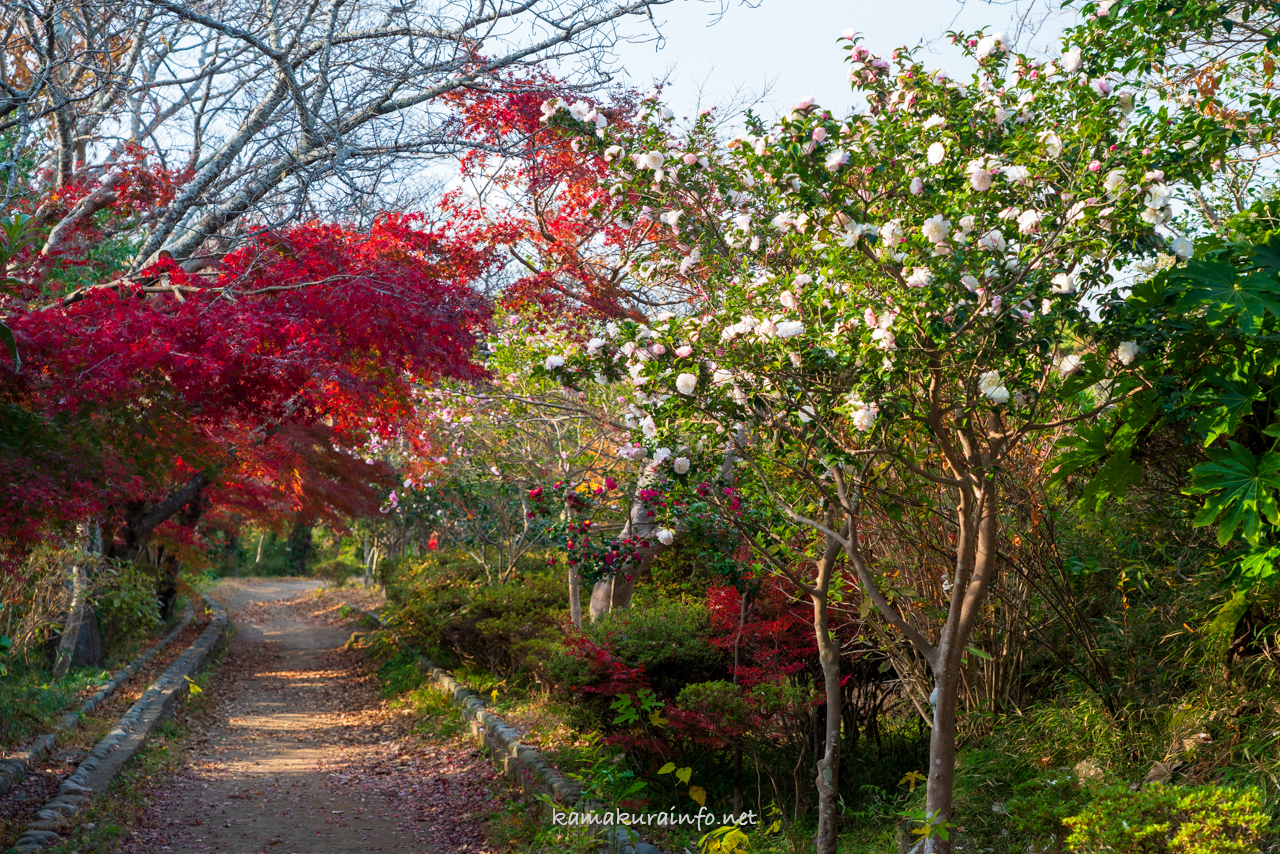
This area seems to have the largest concentration of sasanqua camellias planted around the park.
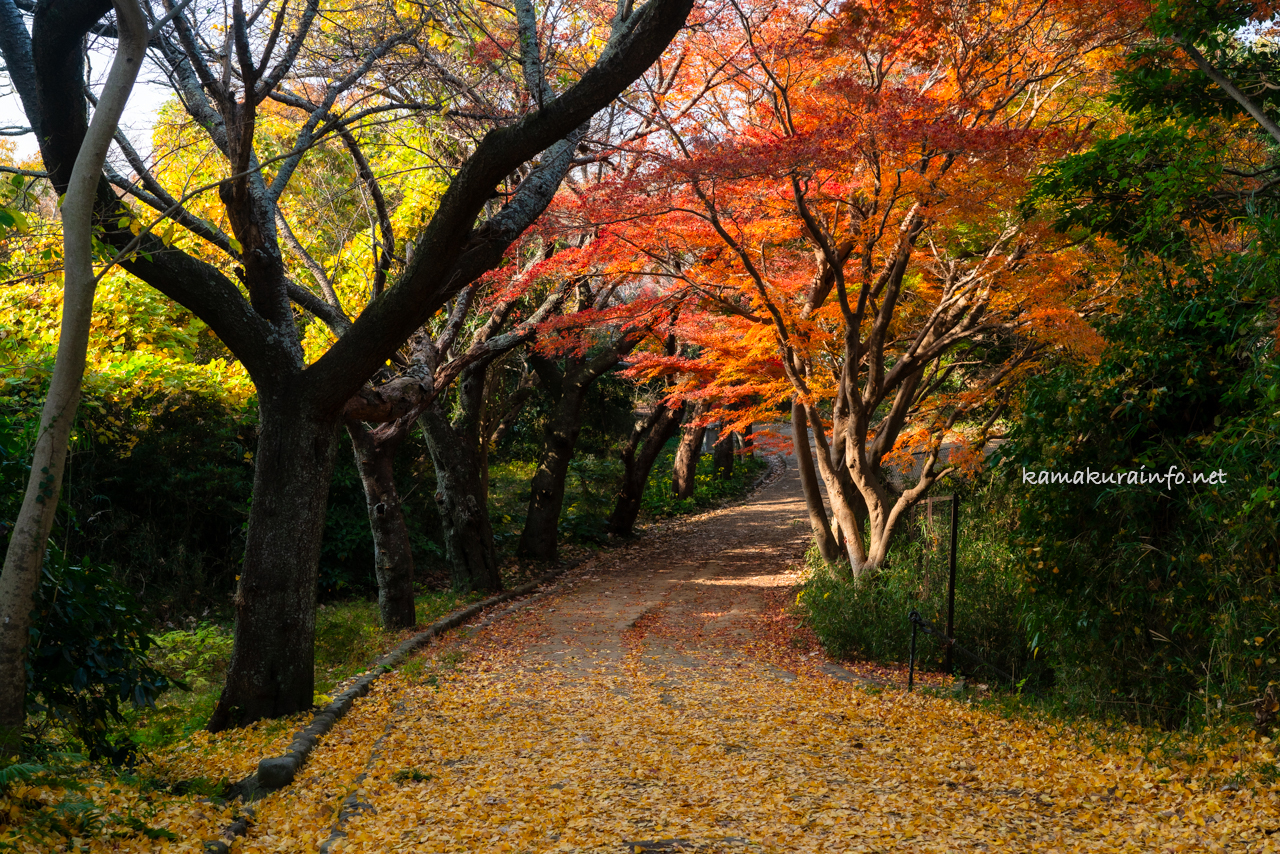
Next, we reached the open area below the summit of Mount Genji, where the restrooms are located. In this area, the ground was covered with fallen ginkgo leaves.
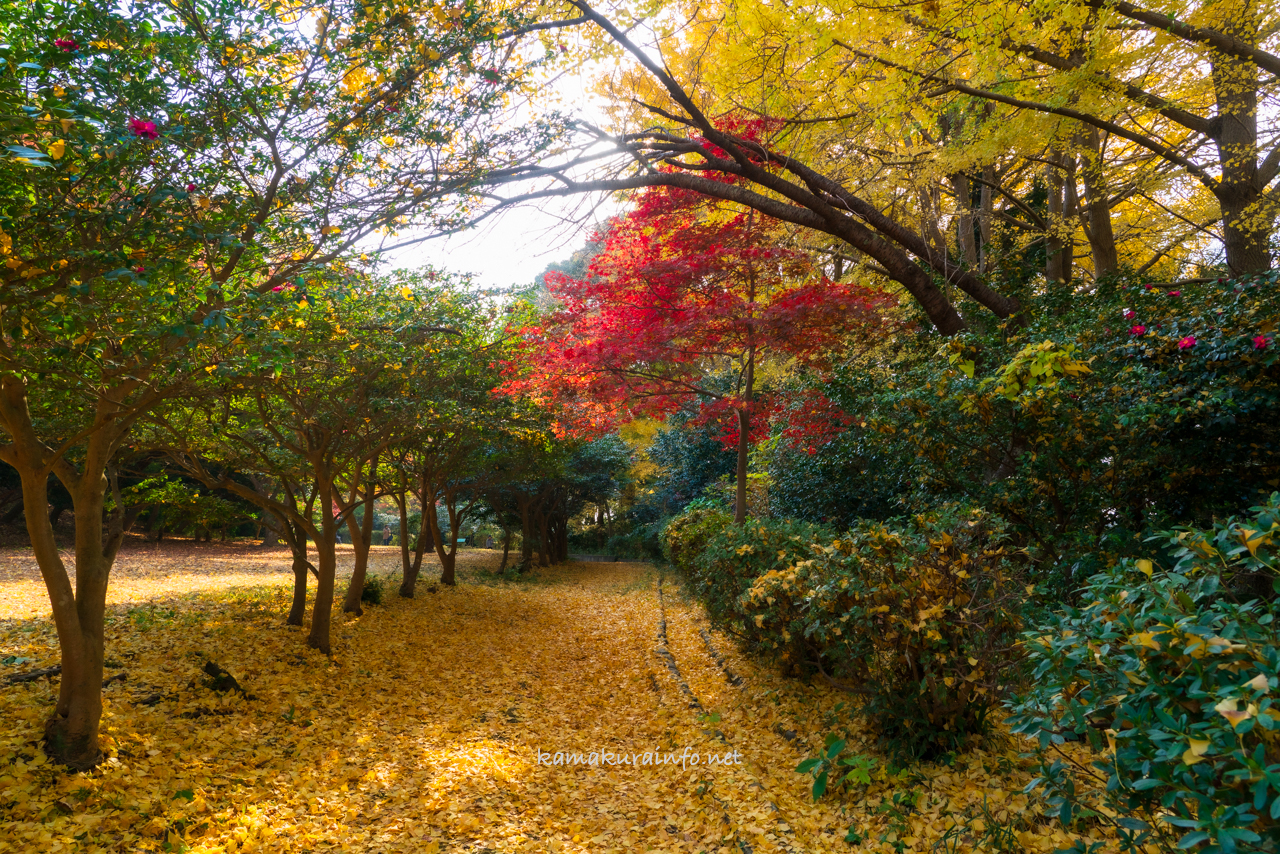
Maple leaves, ginkgo leaves, and even green leaves that have yet to change color created a beautifully colorful scene.
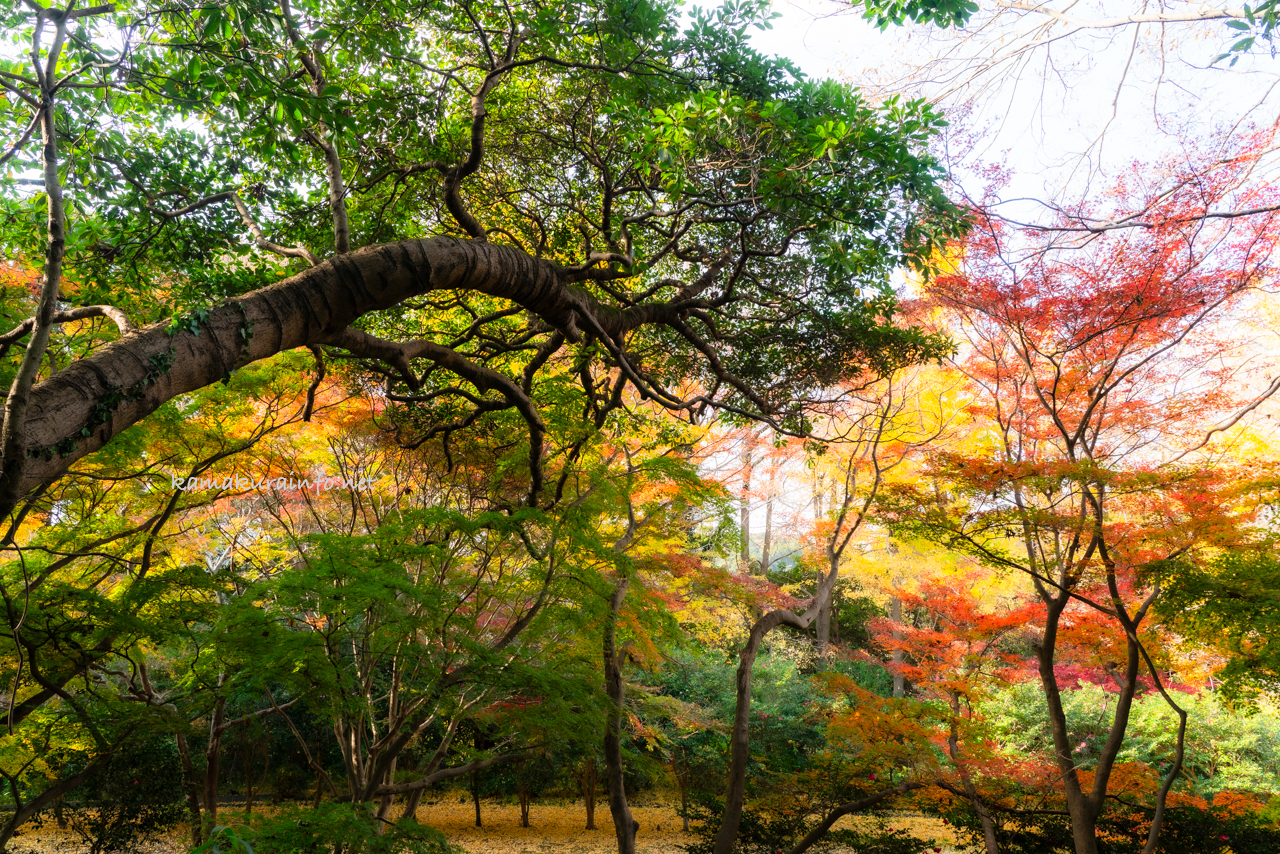
We arrived at the summit of Mount Genji.
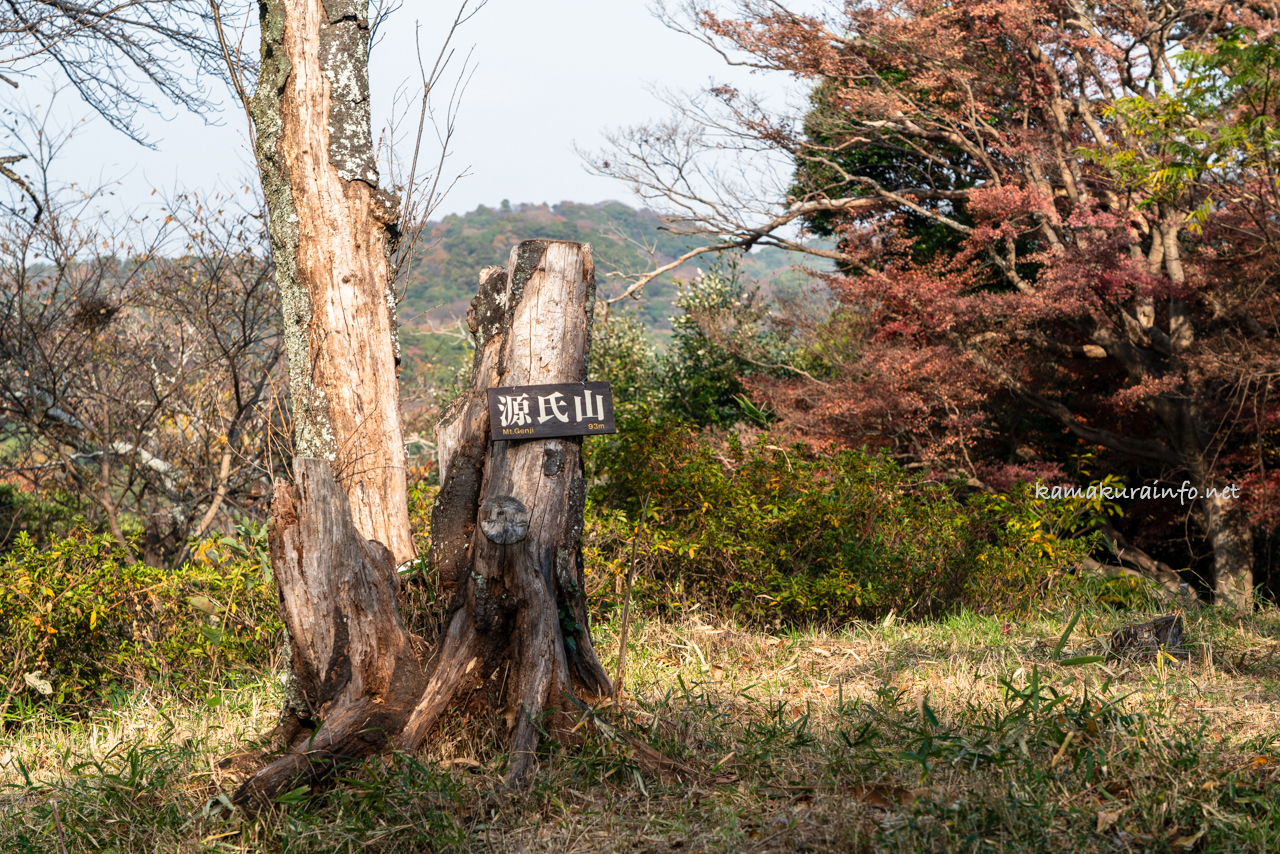
We stop by the open area just below the summit once again.
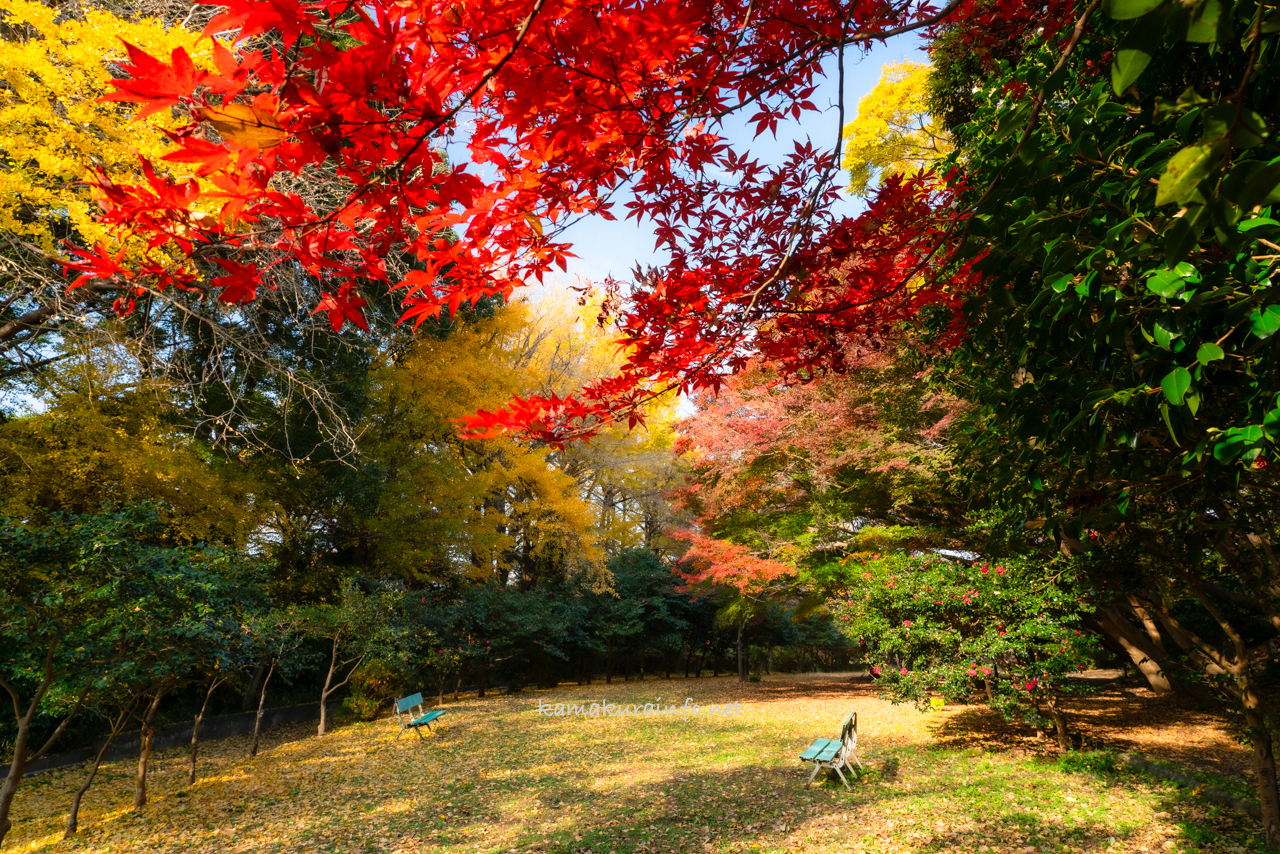
The ground is incredibly thick with fallen ginkgo leaves.
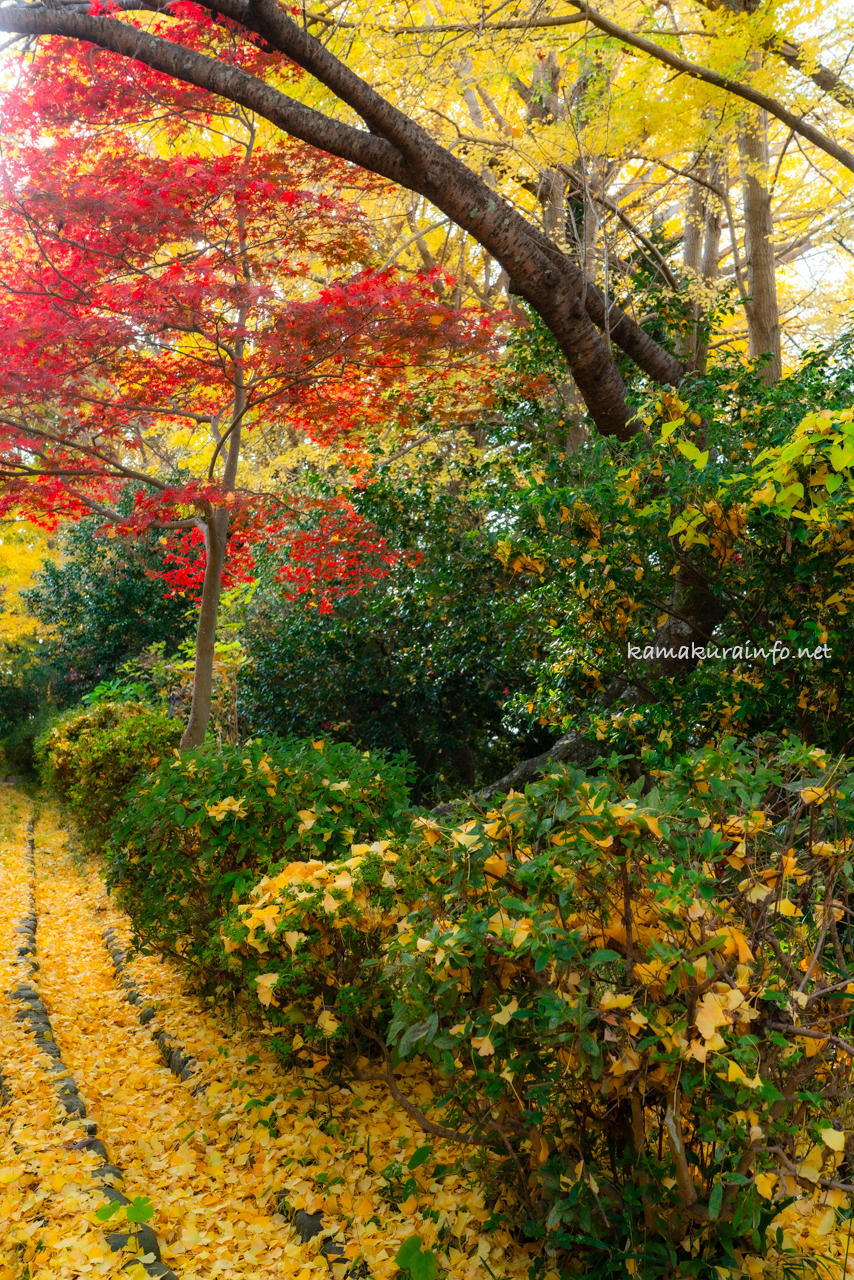
On the way back to the plaza where the statue of Minamoto no Yoritomo stands.
After taking one last look at the statue of Minamoto no Yoritomo, our autumn foliage hike for the day came to an end.
Summary
The hiking route from Kuzuharaoka Shrine to Genjiyama Park in early December offers a truly Kamakura-style autumn experience, where you can enjoy autumn leaves, golden ginkgo trees, and blooming sasanqua camellias all at once. The quiet atmosphere of the historic shrine and the nature-rich scenery of Mount Genji create a calming and peaceful escape. For those who would like to enjoy both sightseeing and hiking at the same time, this is a highly recommended autumn foliage spot.